

Translingual neurostimulation
Translingual neurostimulation (TLNS) is a highly effective form of neurostimulation (neuromodulation) that works by delivering electrotactile stimulation
to the nerve endings on the tip of the tongue, influencing the central nervous system.
It promotes stable, long-term results and supports comprehensive recovery.
Translingual Neurostimulation and Comprehensive Recovery
Key areas of impact:
• Accelerated rehabilitation
• Improved articulation and speech
• Enhanced fine motor skills
• Better balance and coordination
• Increased motor activity
• Development of self-care skills
• Strengthened emotional regulation
• Long-lasting, sustainable results
The research has been going on for over 20 years.
The innovative technology has shown impressive results in the rehabilitation of patients suffering from movement disorders and thinking problems.
Translingual neurostimulation is used in many leading clinics in the country. In addition to impressive, sustainable results, the advantages of the method are non-invasiveness, safety, convenience and ease of use even for weakened patients.
How does this work?
Millions of electrical impulses from the device, applied to thousands of receptors on the front surface of the tongue, are converted into nerve impulses and through the lingual branches of the facial and trigeminal nerves activate the nuclei of the brainstem, cerebellum, thalamus, postcentral lower parietal regions of the cerebral cortex, and, along the cranial nerves, the spinal cord.
As a result, neuroplasticity processes are activated, prerequisites for the creation of new and the change of old neural connections are created. And the direction in the formation of these connections is set by the exercises performed at the time of electrical stimulation.
Why tongue?
The tongue is a unique place for communication with the brain. The signal from other parts of the body comes to the brain through the spinal cord. 10-15 thousand incredibly densely located highly sensitive mechanoreceptors (nerve endings) of the tongue through the trigeminal and facial nerves (the front two thirds of the tongue) transmit the signal directly to the brainstem. Today, this is perhaps the most effective way to stimulate the brainstem directly, leading to an effect on the entire central nervous system, unlike existing methods of magnetic, radiofrequency, electrical neurostimulation.
It is known that 5 out of 12 cranial nerves are connected with the tongue: the glossopharyngeal nerve (the back third of the tongue), the vagus nerve (the root of the tongue), the hypoglossal nerve (muscles of the tongue) and, already mentioned, the trigeminal and facial nerves.
Recently, scientists A. Szelenyi and E. Fava published the data of another amazing experiment. In a large group of people under anesthesia, various nerves and body parts were stimulated with electric current and the reaction in the tongue was measured. With all types of stimulation, responses were obtained in the tongue. In simple terms, if you apply current even to the wrist, after 40 milliseconds, nerve impulses are “read” in the muscles of the tongue. Other studies show that just 30 seconds of electrical stimulation of the tongue provides increased excitability of the cerebral cortex for 6 hours.
How does the procedure take place?
Translingual neurostimulation (TLNS) accelerates the process of creating new and changing old neural connections. Neural connections are created based on our acquisition of new experience, learning, emotions, etc., as a result of our repetition of the same action.
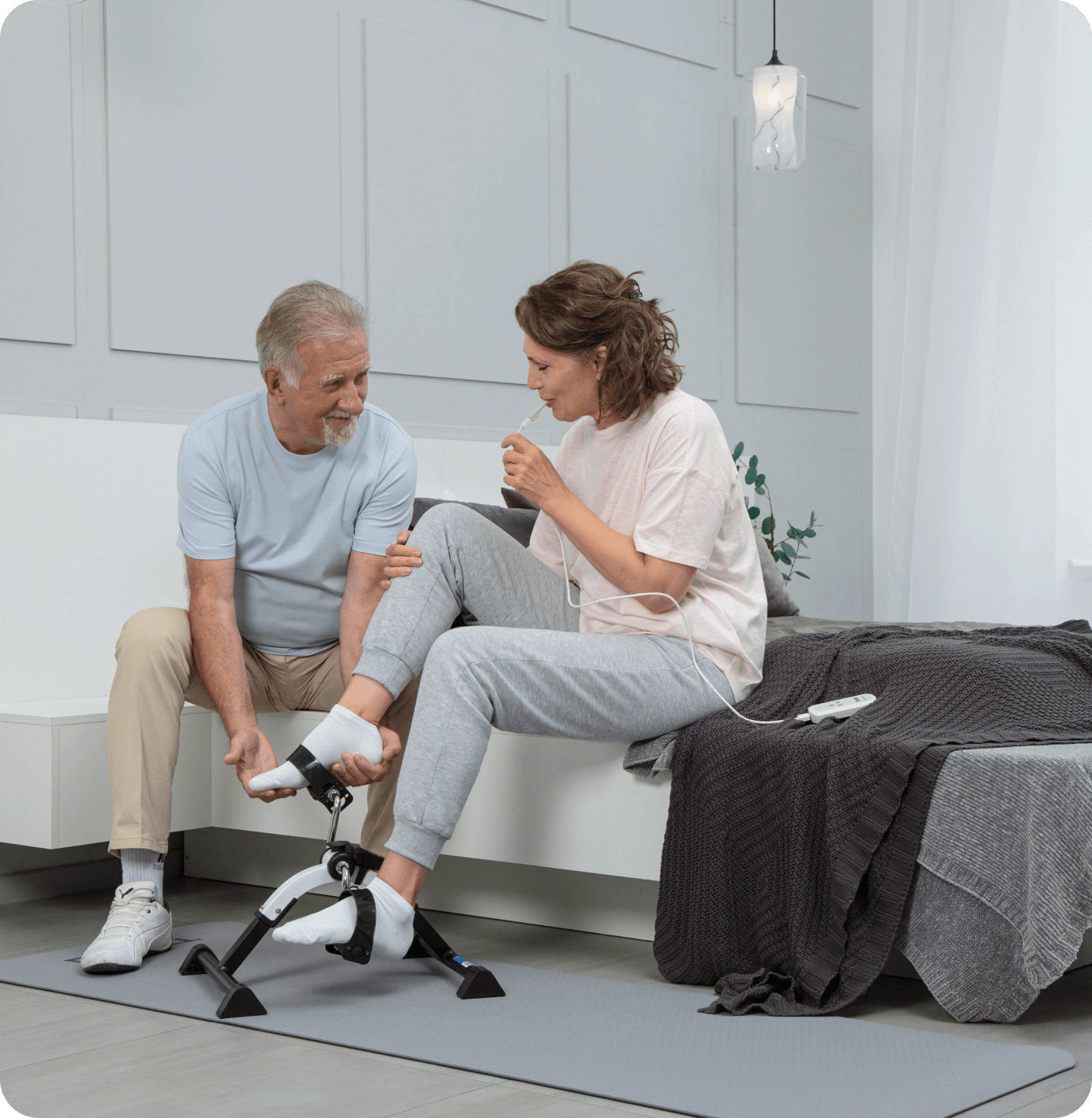
Based on this, electrotactile stimulation of the tongue is carried out at the time of these actions. In the rehabilitation of motor disorders – these are therapeutic physical exercises aimed at involving the corrected parts of the body. In the rehabilitation of problems with thinking – performing cognitive exercises. In training – repeating new material or repeating actions that require reinforcement of skills.
Depending on the disease or individual characteristics of the patient, doctors can prescribe other methods of using the method. The procedure is painless, the devices are small and light, almost invisible during exercise therapy.
Comprehensive restoration
Acceleration of rehabilitation
Articulation and speech
Fine motor skills
Balance and coordination
Motor activity
Self-care skills
Emotional control
Sustainability of results.
Where NeuroPort Helps
Stroke
Vestibular disorders
Movement exercises with the NeuroPort device help restore balance, equilibrium, and return coordination of movements
Cerebral palsy
Demyelinating diseases
Degenerative diseases of the central nervous system
Speech disorders
Attention deficit hyperactivity disorder
NeuroPort helps you learn to concentrate, focus on a specific topic, remember and assimilate material
Insomnia
NeuroPort is a non-prescription sleep medicine for adults that helps activate the production of serotonin and melatonin, the hormones responsible for sleep.