
Cerebral palsy
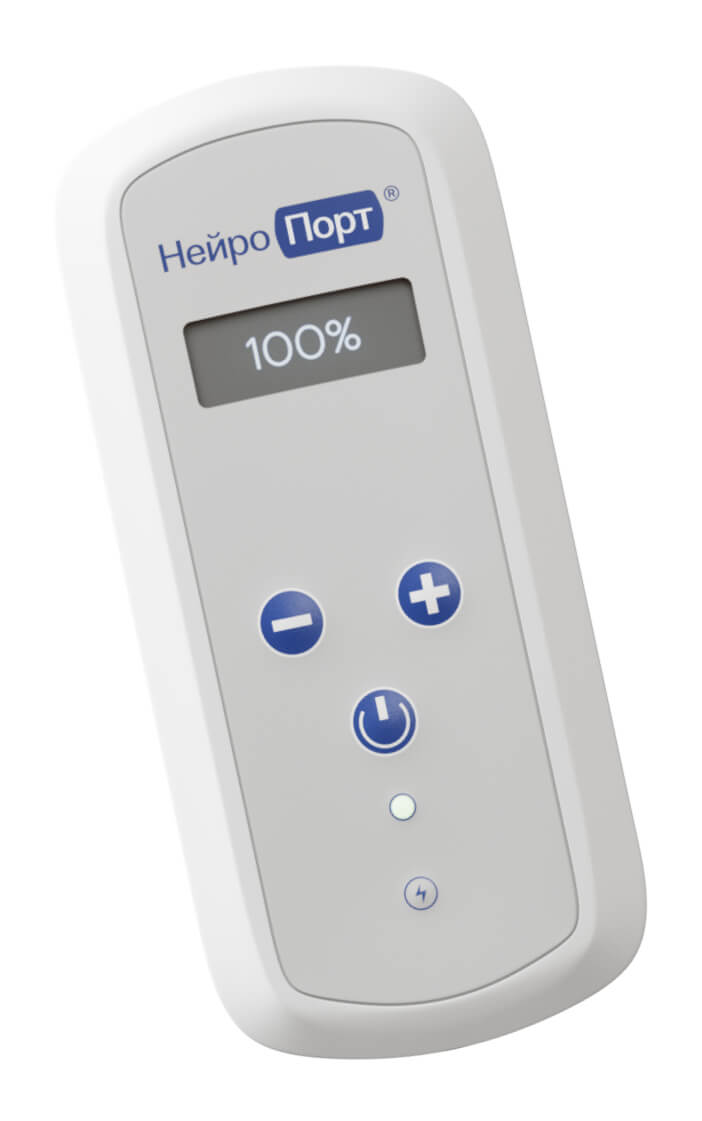
NeyroPort increases the brain’s sensitivity, thereby increasing the effectiveness of rehabilitation programs, the efficiency of physical therapy and drug treatment of cerebral palsy.
Cerebral palsy recovery
Cerebral palsy is a severe disease of the nervous system that often leads to disability. Recently, the number of cases of cerebral palsy in children has increased and it is becoming one of the most common diseases of the nervous system. About 6 out of 100 newborns suffer from cerebral palsy.
Cerebral palsy is characterized by the following triad of disorders: motor disorders, mental disorders, speech disorders. The following forms of cerebral palsy are distinguished: spastic diplegia (bilateral, unilateral), hemiparetic form, double hemiplegia (choreoathetoid, dystonic), hyperkinetic form, atonic-astatic form.
NeyroPort is the key to a new, fulfilling life
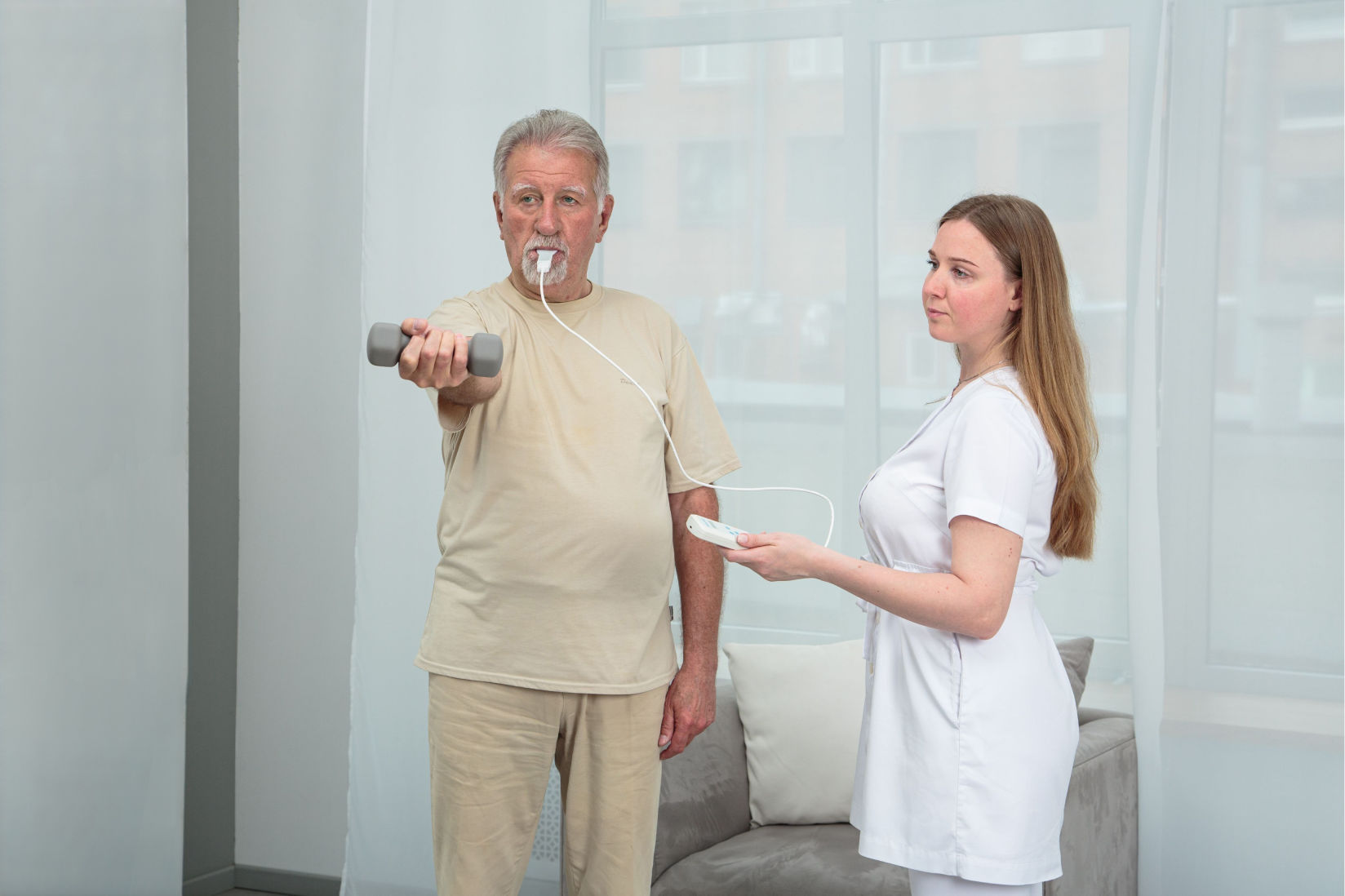
NeyroPort restores and activates neuroplasticity processes. Regular exercises allow you to gradually restore the nervous system and maintain independent coordination of movements.
Spastic diplegia
It is characterized by a violation of muscle tone by the type of spasticity, increased tendon reflexes, pathological foot signs, a tendency to form pathological postures, deformations and contractures of joints, pathological synergies and synkinesis.
The most common form of cerebral palsy (50% of all cases of cerebral palsy). The severity of speech, mental and motor disorders may vary. 70–80% have speech disorders in the form of erased spastic-paretic dysarthria, delayed speech development, and less often motor alalia. With the early start of speech therapy, speech disorders are observed less often, and the degree of their severity is significantly less. Mental disorders are found in most children. Most often, they manifest themselves in the form of mental retardation. Some children have mental retardation of varying severity.
Severity of movement disorders:
– severe degree: the child does not master the skills of walking and manipulative activity, cannot independently serve himself;
– moderate degree: the child moves independently, using auxiliary means – Canadian crutches, axillary crutches, canes; is not able to independently move around the city, travel by transport; self-service skills are formed partially due to violations of the manipulative function;
– mild degree: the child moves without outside help over long distances, fully serves himself, manipulative activity is sufficiently developed, but incorrect pathological postures, gait disorders, and movement coordination are observed.
Hemiparetic form
Characterized by the side of the lesion. The arm is usually damaged to a greater extent than the leg. Depending on the location of the lesion, various disorders may be observed in this form of cerebral palsy. Right-sided hemiparesis is more common than left-sided. The left hemisphere suffers primarily from exposure to harmful factors as it is phylogenetically younger. Its functions are complex and varied.
Disorders in the right-sided form:
– gnostic functions;
– spatial disorders;
– mirror writing;
– speech disorders in the form of dyslexia, dysgraphia;
– counting disorders;
– hearing loss;
– phonemic perception disorders.
Disorders in the left-sided form:
– pathology of the emotional-volitional sphere;
– speech pathology is observed in 30–40% of children, most often of the spastic-paretic dysarthria type.
Double hemiplegia
The most severe form of cerebral palsy, in which there is total damage to the brain, primarily its cerebral hemispheres. Characterized by tetraparesis (damage to both pairs of limbs).
Motor disorders can be expressed equally in the arms and legs or predominate in the arms. Voluntary motor skills are absent or severely limited, children are immobilized, and hand function practically does not develop.
All children have severe speech disorders such as anarthria, severe spastic-rigid dysarthria. Most children (90%) have severe mental retardation. Convulsive (45-60%) and other concomitant syndromes are common.
The prognosis for motor, mental, and speech development is unfavorable. In most cases, these children are unteachable, incapable of self-care and simple work activities.
Hyperkinetic form
Localization of the lesion in the subcortical formations, cerebellar region. Often the cause is bilirubin encephalopathy (incompatibility of the mother by the Rh factor), as well as hemorrhage in the caudate region, which occurs as a result of birth trauma.
Motor disorders manifest themselves in the form of involuntary violent movements (severe hyperkinesis). Hyperkinesis occurs involuntarily, increases with movement, excitement or fatigue, as well as with attempts at voluntary movements. At rest, hyperkinesis decreases and almost completely disappears during sleep.
The first manifestations of hyperkinesis appear from 4-6 months in the muscles of the tongue, by 10-18 months – in other parts of the body, reaching full development by 2-3 years.
Atonic-astatic form
In this form of cerebral palsy, there is damage to the cerebellum, in some cases combined with damage to the frontal-parietal region of the cerebral cortex.
In terms of the motor sphere, the following are observed: low muscle tone, disturbances in body balance at rest and when walking, disturbances in the sense of balance and coordination of movements, tremor, hypermetria (disproportion, excessive movements).
An important role in the structure of the mental defect is played by the main localization of the brain damage, on which the degree of intellectual impairment depends. With damage to the cerebellum only: children are timid, fearful, lack initiative, many exhibit a fear of falling and moving, they have a hard time coping with their defect, they have viscosity of thinking, impaired attention, and delayed development of reading and writing skills. In 55% of cases (according to Semenova K.A.), in addition to severe motor disorders, children with this form of cerebral palsy have a severe degree of mental retardation.
Translingual neurostimulation
Methodology of work
General recommendation
The use of NeyroPort is indicated in courses depending on the degree of impairment. Individual consultation and doctor’s supervision are recommended.
Spastic diplegia, double hemiplegia
Combine the course with exercise therapy, speech therapy, and medication.
Hyperkinetic form, Atonical-astatic form
Combine the course with exercise therapy, speech therapy, and medication.
Hemiparetic form
Combine the course with exercise therapy, spatial representation classes, speech therapy classes, development of cognitive functions, as well as drug treatment
Exercise at home or under the supervision of a physician
1 session = 20 minutes
1 session per day
15-20 sessions per course
1-3 months of rest
Video
Training
First training session using NeyroPort
Training on Lokomat using Neyroport
The robotic orthopedic trainer Lokomot together with the translingual stimulation trainer NeyroPort allows you to: speed up the rehabilitation process, get an additional effect from training; consolidate the natural.
Neurorehabilitation - Moskin Oleg Viktorovich
Oleg Viktorovich Moskin conducts neurorehabilitation classes with the Neyroport device.
Neyroport is a translingual stimulation device that provides recovery after a stroke, craniocerebral…
Exercises after a stroke at home
What exercises to do during rehabilitation
Acceleration of rehabilitationArticulation and speechFine motor skillsBalance and coordinationMotor activityRestoration of the nervous systemControl of emotionsSustainability of results
Contraindications
The translingual neurostimulation technique is capable of providing stable long-term results, but should not be used in.
– Severe cardiovascular diseases in the decompensation stage
– Acute infectious diseases
– Presence of a pacemaker or other electronic implants
– Infectious skin diseases
– Damage to the oral mucosa
– Allergic reactions to gold, copper, nickel
– Infectious diseases of the oral cavity
– Pregnant women and children under three years of age
– Epilepsy
– Individual intolerance to the electric field