

Vestibular disorders
Movement exercises with the NeyroPort device help restore balance, equilibrium, and return coordination of movements
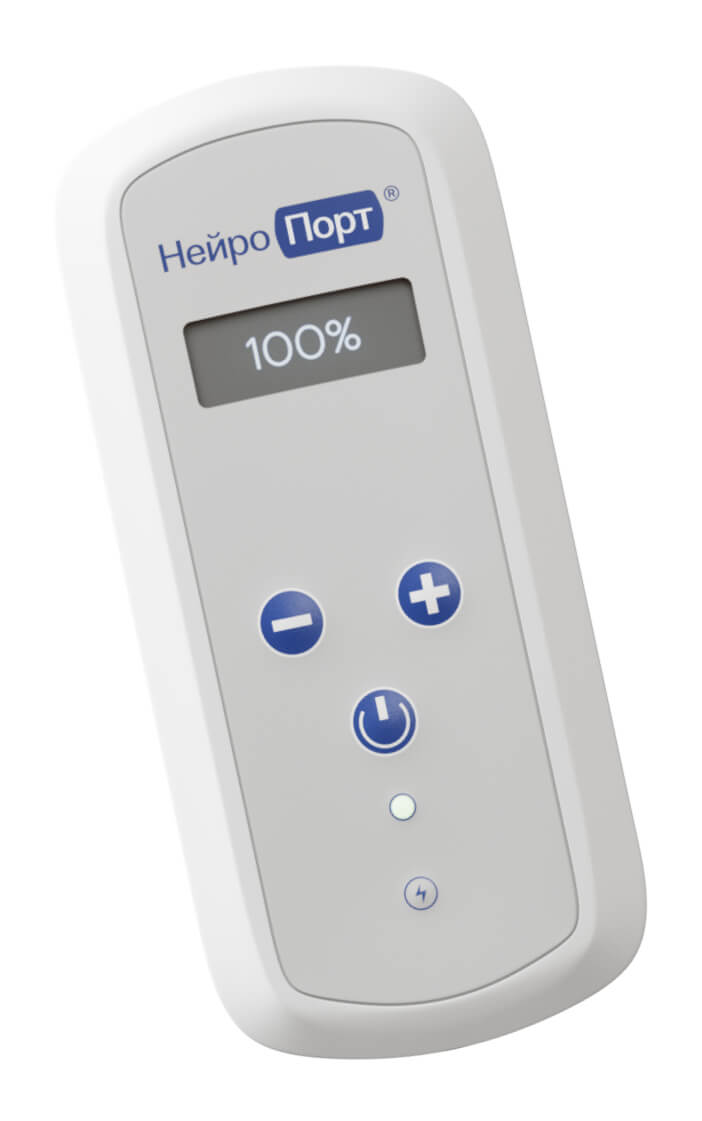
Vestibular rehabilitation with NeyroPort
Vestibular disorders can be caused by problems in the inner ear or brain, can be a result of taking certain medications, and are also directly related to aging. There are a number of diseases that lead to dysfunction of the inner ear structures, or the brain receives incorrect information from the receptors of these structures.
These diseases include: Meniere’s syndrome, labyrinthitis, benign paroxysmal positional vertigo, middle ear infections, tumors, or injuries.
NeyroPort is the key to a new, fulfilling life
NeyroPort does not replace drug and physical therapy treatment, it accelerates the rehabilitation process.
Where NeyroPort Helps
The sense of balance is primarily controlled by the labyrinth, a structure in the inner ear. One part of the labyrinth consists of the semicircular canals and otolith receptors, which are responsible for body balance. On the other side is the cochlea-shaped organ, which is responsible for hearing. The parts of the inner ear associated with balance are called the vestibular apparatus. There are a number of common causes of vestibular syndrome.
Benign paroxysmal positional vertigo
A brief, intense episode of dizziness that occurs when lifting or turning the head. An episode of such dizziness can even occur when turning in bed. It is believed that the cause of this type of dizziness is a disorder in the structure of the semicircular receptors, which send unreliable information to the brain about the position of the head. It occurs as a result of a head injury, neuritis, or age-related changes.
Labyrinth infarction
Labyrinthine infarction results in sudden significant loss of auditory and vestibular function and usually occurs in elderly patients. Sometimes this condition also occurs in younger patients with atherosclerotic vascular diseases or with hypercoagulability. Episodic dizziness may be a precursor to complete occlusion and proceed as a transient ischemic attack. After complete occlusion, the intensity of dizziness gradually decreases, but a certain instability in movement may persist for several months – until vestibular compensation occurs.
Vestibular neuronitis
Nerve damage associated with a viral infection (herpes virus). The disease usually occurs in the fall and spring during the peak of acute respiratory infections. With vestibular neuronitis, episodes of dizziness occur without hearing loss and may be accompanied by nausea and vomiting. The duration of an episode can vary from several days to several weeks, with a gradual decrease in symptoms. Vestibular neuronitis may be accompanied by attacks of benign positional vertigo.
Labyrinthitis
Labyrinthitis is caused by an inflammatory process within the membranous labyrinth, which can be caused by a bacterial or viral infection. Viral infections of the labyrinth cause symptoms of vertigo similar to vestibular neuritis, but in combination with cochlear disorders. Infections such as measles, rubella, cytomegalovirus, as a rule, do not cause vestibular disorders. Bacterial labyrinthitis can be either with damage to the membranous labyrinth itself, or in a serous form. The serous form of labyrinthitis is often observed in acute otitis media, when bacterial toxins diffusely enter the labyrinth.
Meniere's disease
A disorder of the inner ear characterized by episodic attacks of vertigo, sensorineural hearing loss, tinnitus, and a sensation of pressure on the ear membranes. Hearing loss at low frequencies begins, with gradual progression of hearing loss at other frequencies as episodes recur. Episodes of Ménière’s disease are accompanied by true vertigo, usually with nausea and vomiting, and last for several hours. The disorder is thought to be due to widening of the endolymphatic space, with ruptures and subsequent regeneration of the membranous labyrinth.
Migraine
Migraine may resemble attacks of Meniere’s disease. However, with migraine, hearing loss is less common than dizziness, tinnitus, photophobia, and phonophobia. However, with migraine, there may be a certain sensorineural hearing loss to low-frequency sound vibrations. Therefore, sometimes an accurate diagnosis is difficult.
Multiple sclerosis
Multiple sclerosis can be similar to migraines. In 5% of cases, multiple sclerosis begins with debilitating dizziness, and 50% of patients with multiple sclerosis experience episodes of dizziness at certain points in the disease. One in ten patients with multiple sclerosis may experience partial or complete hearing loss, making the symptoms similar to Meniere’s disease or migraines.
Discharge disease
Attacks of dizziness that occur after traveling by train, car, or boat. The person continues to feel movement and swaying after disembarking.
Other causes of vestibular syndrome
Damage to the vestibular analyzer can be caused by head trauma, whiplash, acoustic neuroma, drug intoxication, conditions following ear surgery, musculoskeletal disease (with impaired proprioception), or central nervous system disease.
When the vestibular analyzer malfunctions, a sensation of movement and rotation of the body occurs, although the person is standing or lying down. The person may stagger when trying to walk or fall when trying to stand up.
Symptoms may appear and disappear over a short period of time or have long intervals between attacks.
Common symptoms
– dizziness or feeling light-headed;
– falling or feeling like you might fall;
– weakness;
– blurred vision;
– disorientation;
– nausea, diarrhea, vomiting;
– changes in heart rate and blood pressure;
– fear, anxiety, or panic;
– depression;
– fatigue, inability to concentrate.
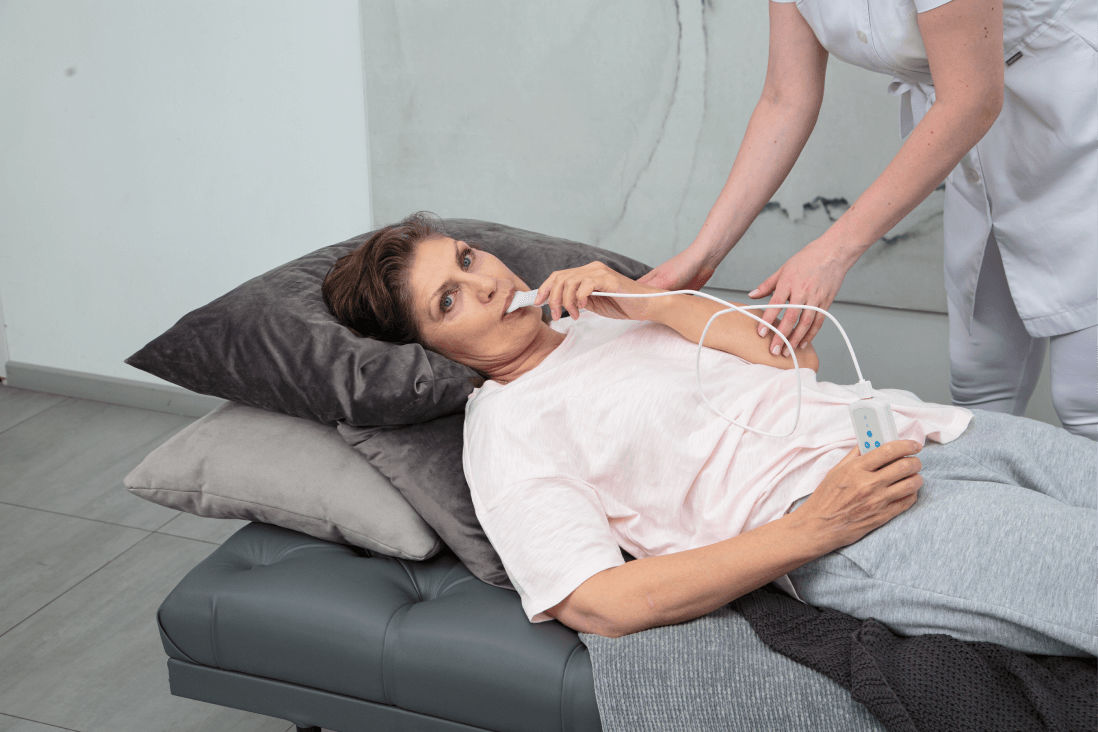
Translingual neurostimulation
Methodology of work
General recommendation
Combine the course with physical exercises, eye exercises, and medication.
Diagnostics
Individual consultation and medical supervision are recommended.
Training program
Classes can be conducted independently or in a group, according to an individual program prescribed by the attending physician or rehabilitation specialist.
Application of NeyroPort
The use of NeyroPort is indicated in courses. The frequency of course repetition depends on the dynamics of changes.
Exercise at home or under the supervision of a physician
1 session = 20-25 minutes
1-2 sessions per day
10-20 sessions per course
Video
Training

First training session using NeyroPort
Training on Lokomat using Neyroport
The robotic orthopedic trainer Lokomot together with the translingual stimulation trainer NeyroPort allows you to: speed up the rehabilitation process, get an additional effect from training; consolidate the natural.
Neurorehabilitation - Moskin Oleg Viktorovich
Oleg Viktorovich Moskin conducts neurorehabilitation classes with the Neyroport device.
Neyroport is a translingual stimulation device that provides recovery after a stroke, craniocerebral…
Exercises after a stroke at home
What exercises to do during rehabilitation
Acceleration of rehabilitationArticulation and speechReduction of headachesBalance and coordinationMotor activityConcentration of attentionControl of emotionsSustainability of results
Contraindications
The translingual neurostimulation technique is capable of providing stable long-term results, but should not be used in.
– Severe cardiovascular diseases in the decompensation stage
– Acute infectious diseases
– Presence of a pacemaker or other electronic implants
– Infectious skin diseases
– Damage to the oral mucosa
– Allergic reactions to gold, copper, nickel
– Infectious diseases of the oral cavity
– Pregnant women and children under three years of age
– Epilepsy
– Individual intolerance to the electric field